Booking a Visit
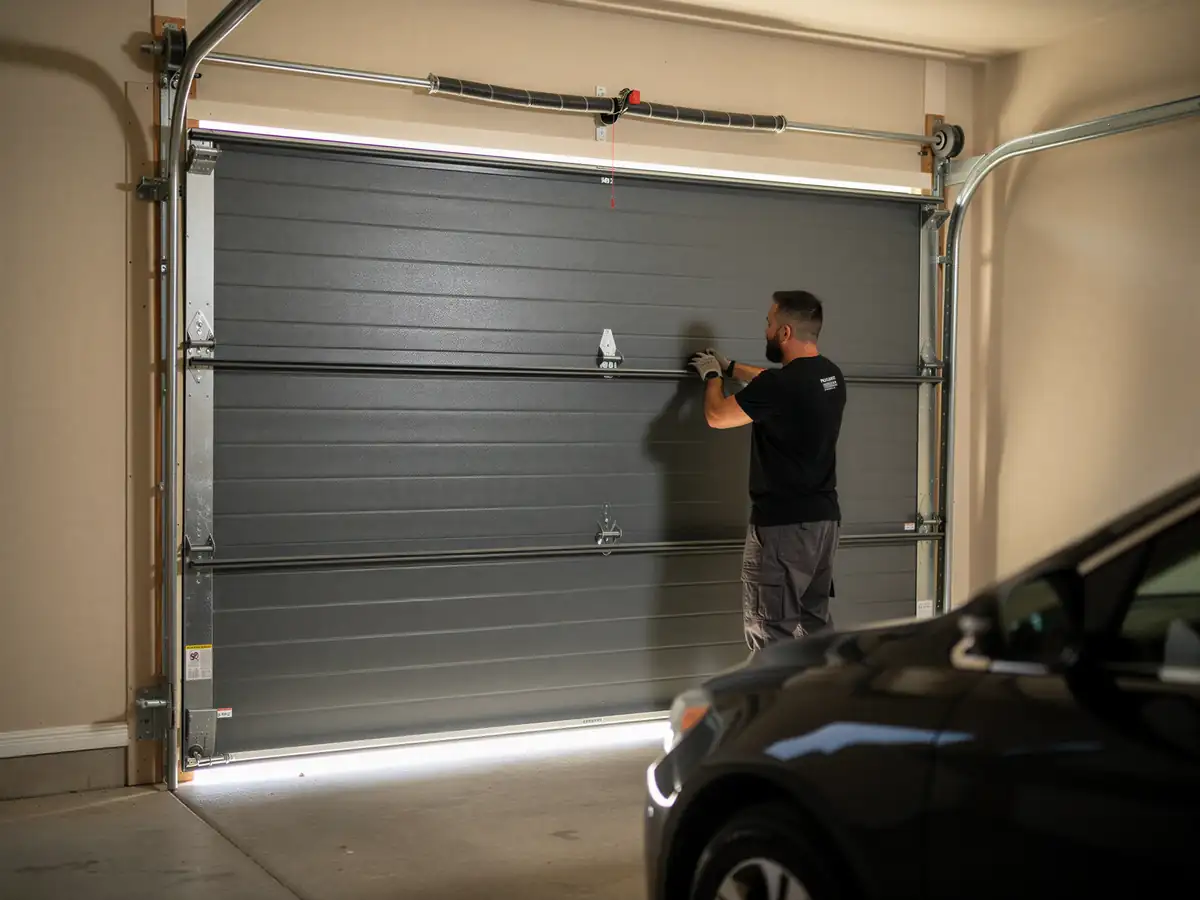
We run out of Grass Valley, and Lake of the Pines sits about 13 miles out, farther than most of the other stops on our list. That doesn't change what we bring to the job, but it does mean an off-track call here usually gets scheduled alongside other runs toward Penn Valley or Lake Wildwood on the same loop, rather than as a standalone trip. If your door is already off the track and leaning, don't try to force it back on - a bent track under load can snap a cable or drop the section on someone. Call and describe what you're seeing: which side, whether the door moved when it happened, and whether you can still see daylight between the roller and the track. That tells us what to load on the truck before we leave Grass Valley. See coverage for Lake of the Pines for what else we handle out this way, or check the general off-track page for Grass Valley if you want the broader rundown on how the repair works.
We don't keep a branch or a standing crew in Lake of the Pines itself. Every call starts from Grass Valley, so same-day isn't guaranteed the way it might be for someone five minutes from the shop.
What Causes It Around Here
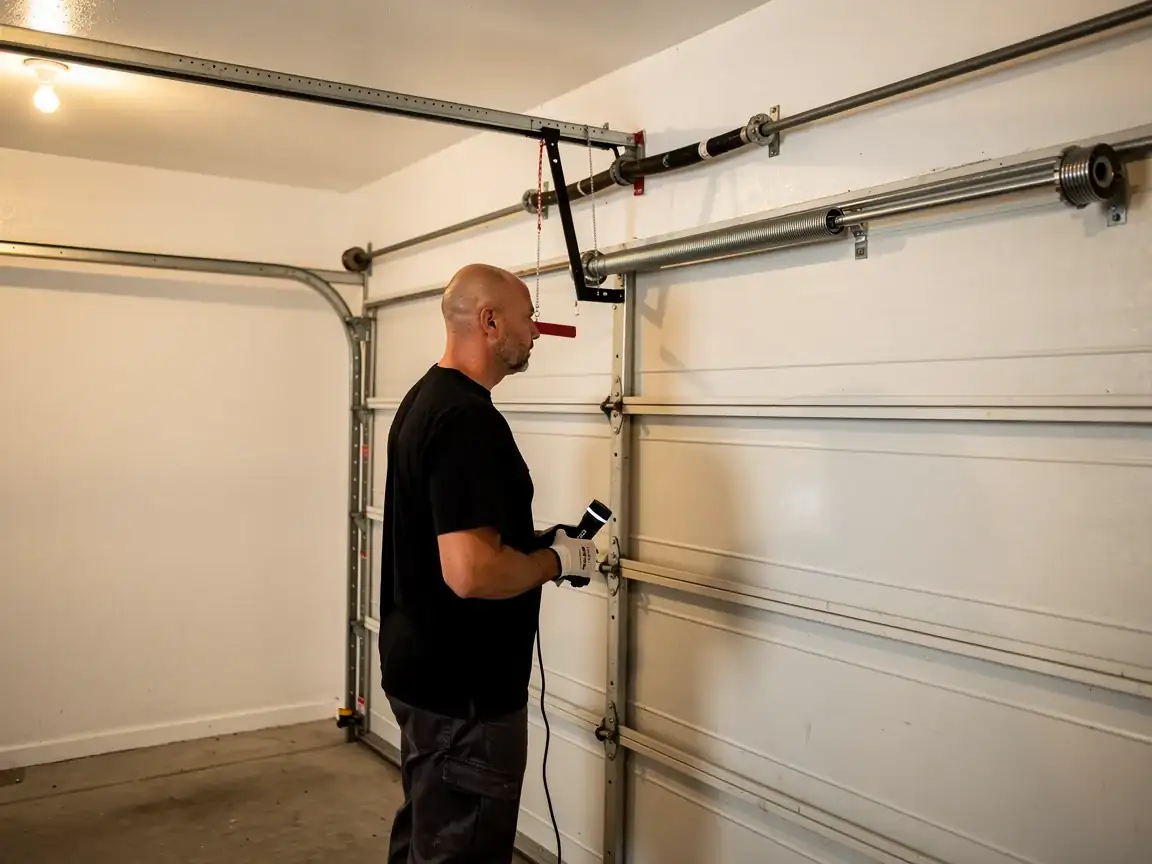
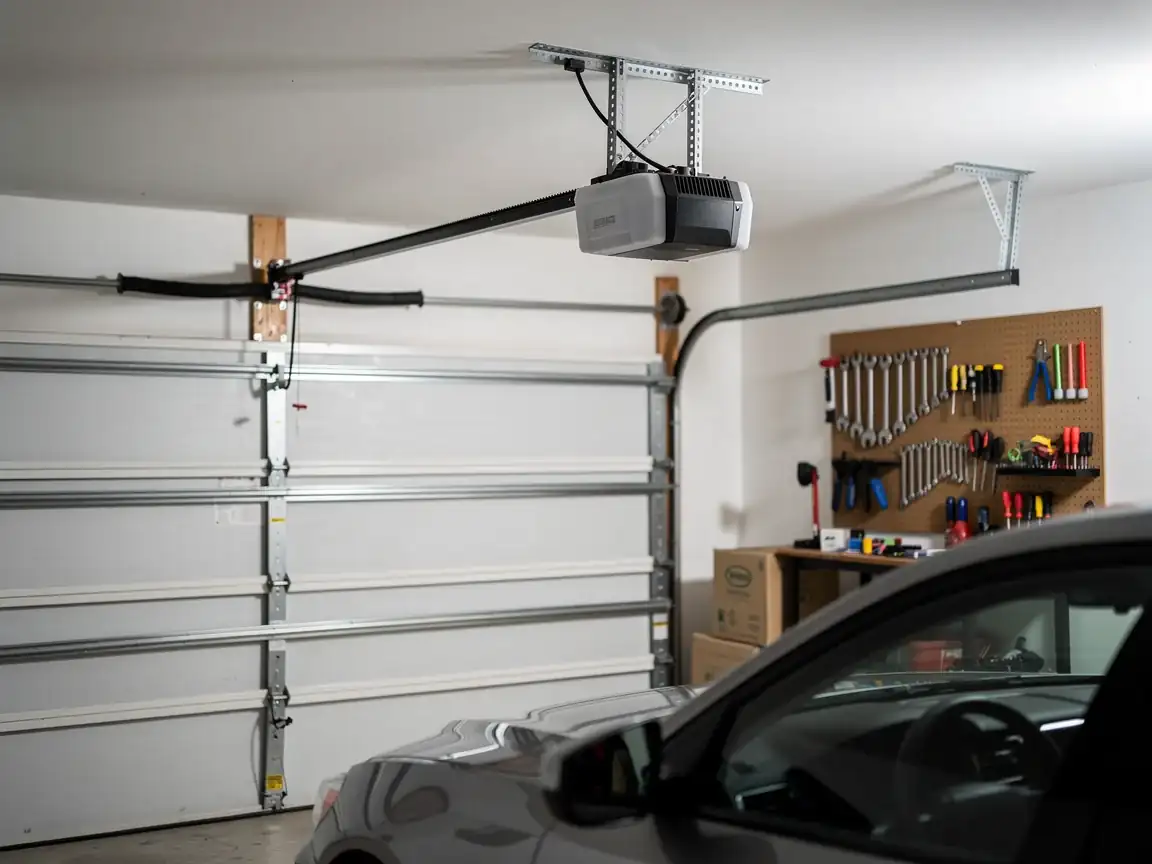
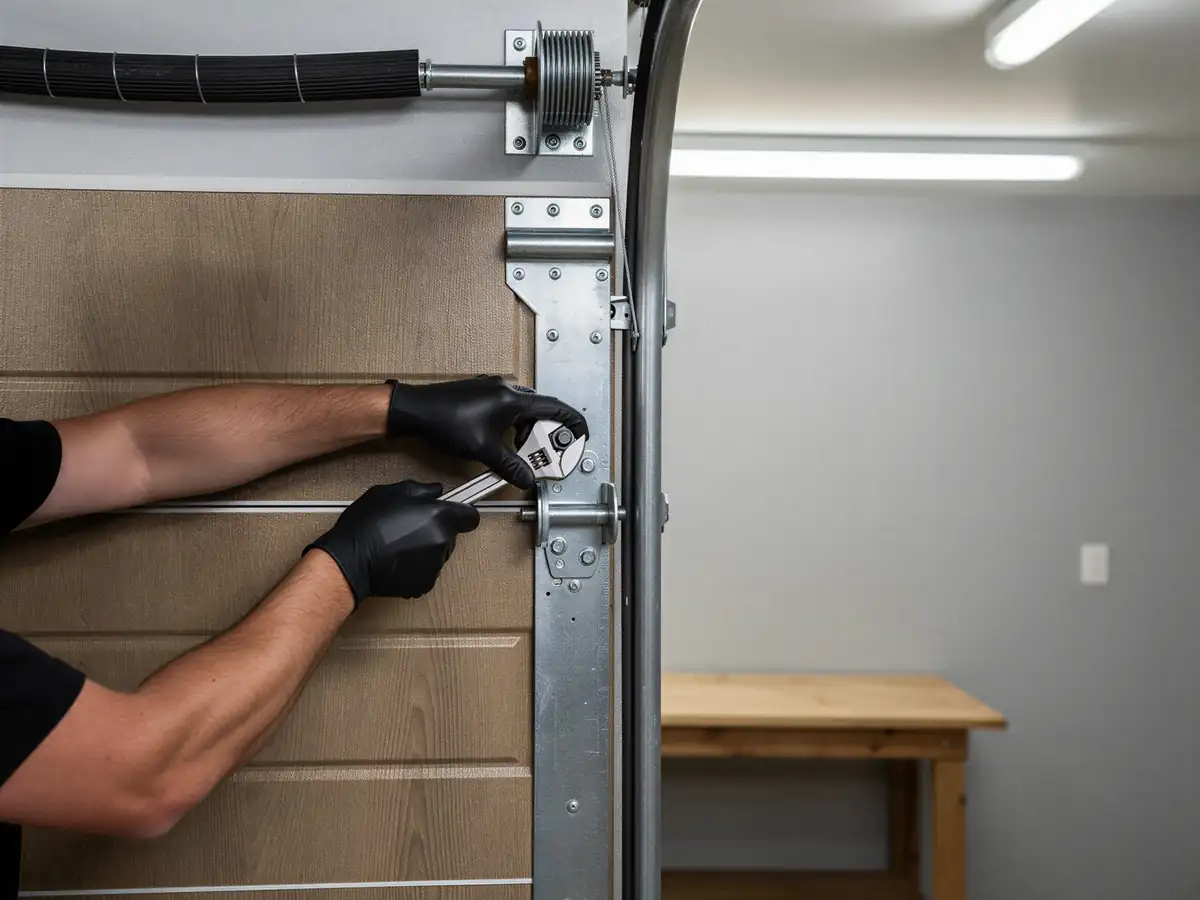
Lake of the Pines homes have a median build year of 1981, which puts the neighborhood about four years newer than the 1977 median across the rest of our service area. That gap matters more than it sounds. Doors from the early 1980s around here tend to be steel roller doors on galvanized track with nylon rollers, installed with the extension-spring hardware that was standard before torsion setups took over. Extension springs run along the horizontal track rather than above the door, and when one side loses tension unevenly, the door cocks sideways and a roller rides up out of the track instead of running straight.
On the older 1960s stock elsewhere in the service area, we're usually chasing torsion spring failure first. Here, it's more often a stretched or unbalanced extension spring, a roller that's worn through its nylon sleeve, or a track bracket that's loosened over four decades of use. Same symptom, different root cause, because the hardware generation is different.
The Complications
The region sits in a mild climate with occasional freeze
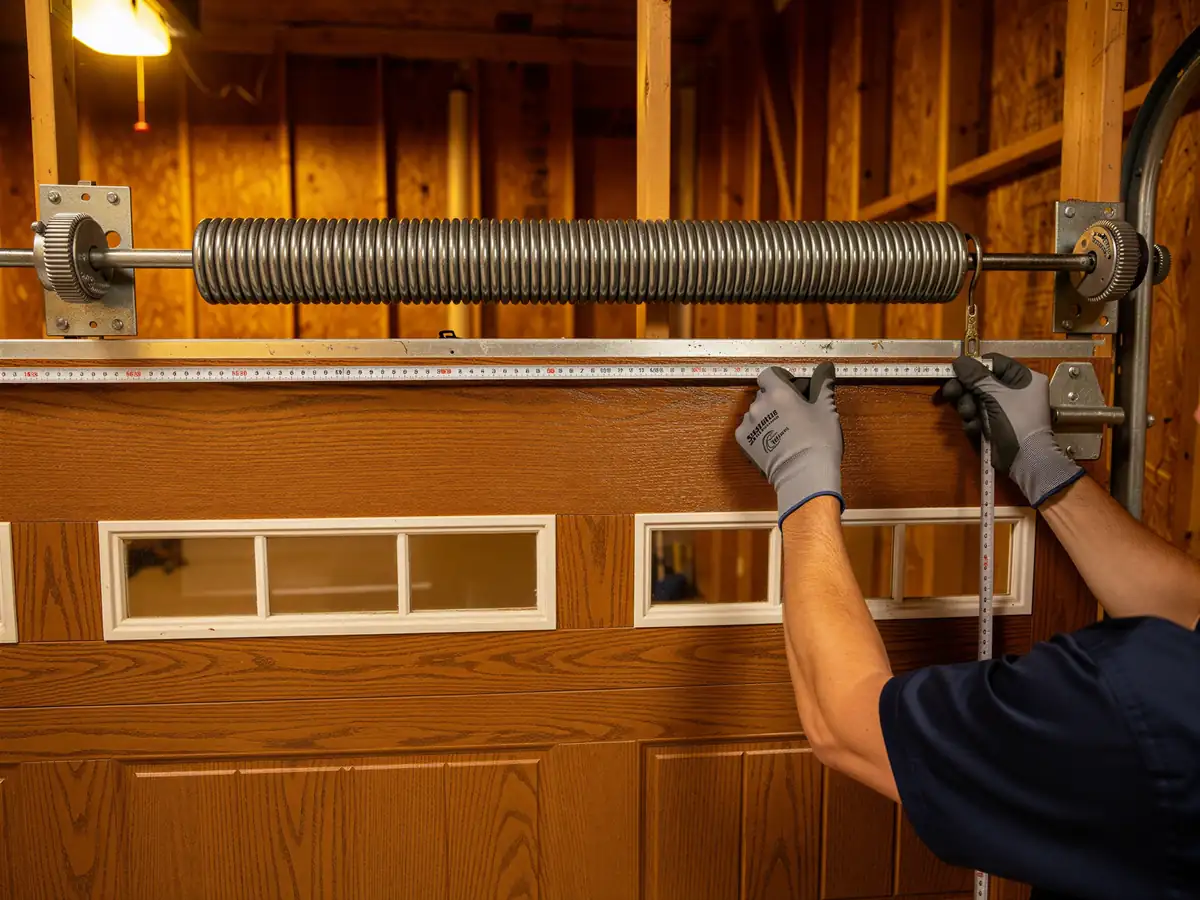
So we're not dealing with the kind of hard freeze-thaw cycling that cracks track brackets or seizes rollers solid the way colder climates do. That's one less variable. The complication in Lake of the Pines is the age of the extension-spring hardware itself: doors built in 1981 predate the safety-cable requirement that runs a cable through the spring to contain it if it breaks. If your door still has the original extension springs with no cable through the coil, an off-track repair is also the moment to flag that gap, because reattaching a door to unsafe spring hardware isn't a fix we're willing to call finished.
Household income in Lake of the Pines runs well above the service-area median
$118,661 against $91,135 - and in practice that means more owners here choose full track and roller replacement over a patch when the hardware is this old, rather than stretching a 40-year-old system another few years. That's a choice, not a requirement, and we'll tell you honestly when a patch will hold and when it won't.
The Symptom
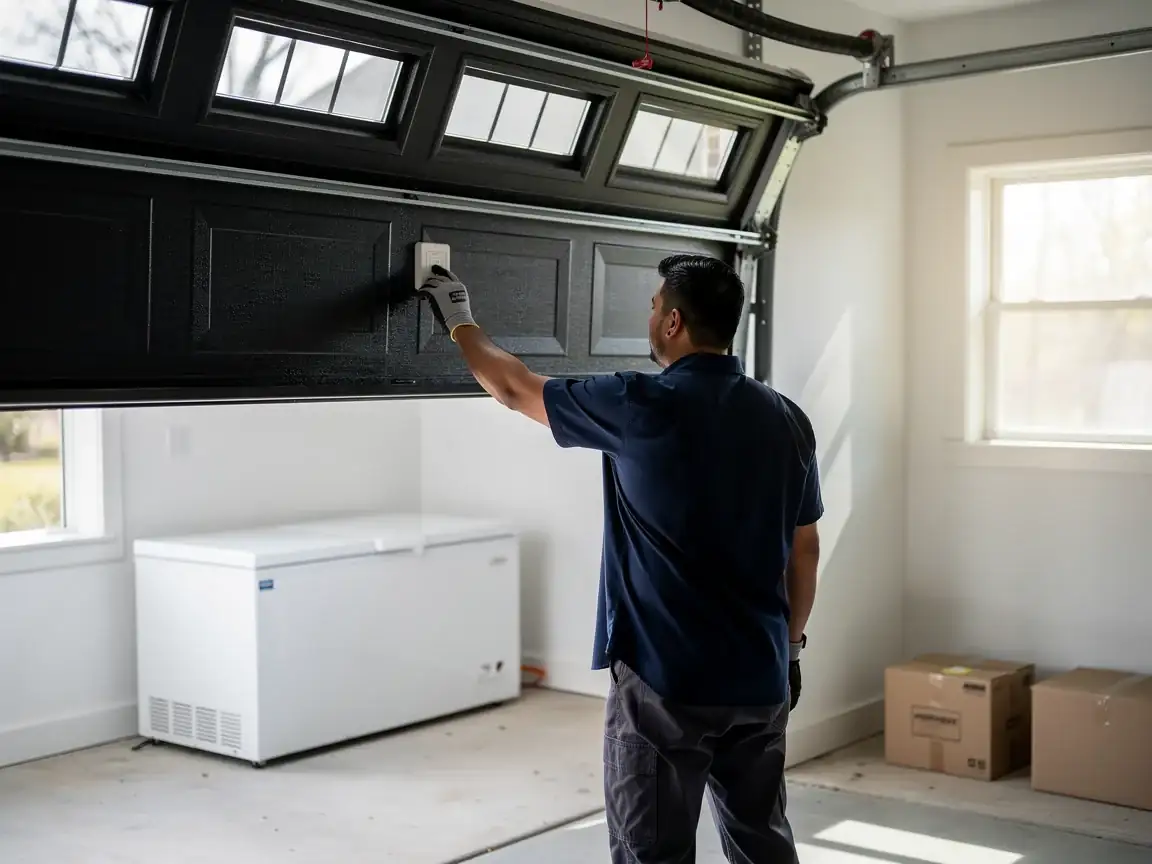
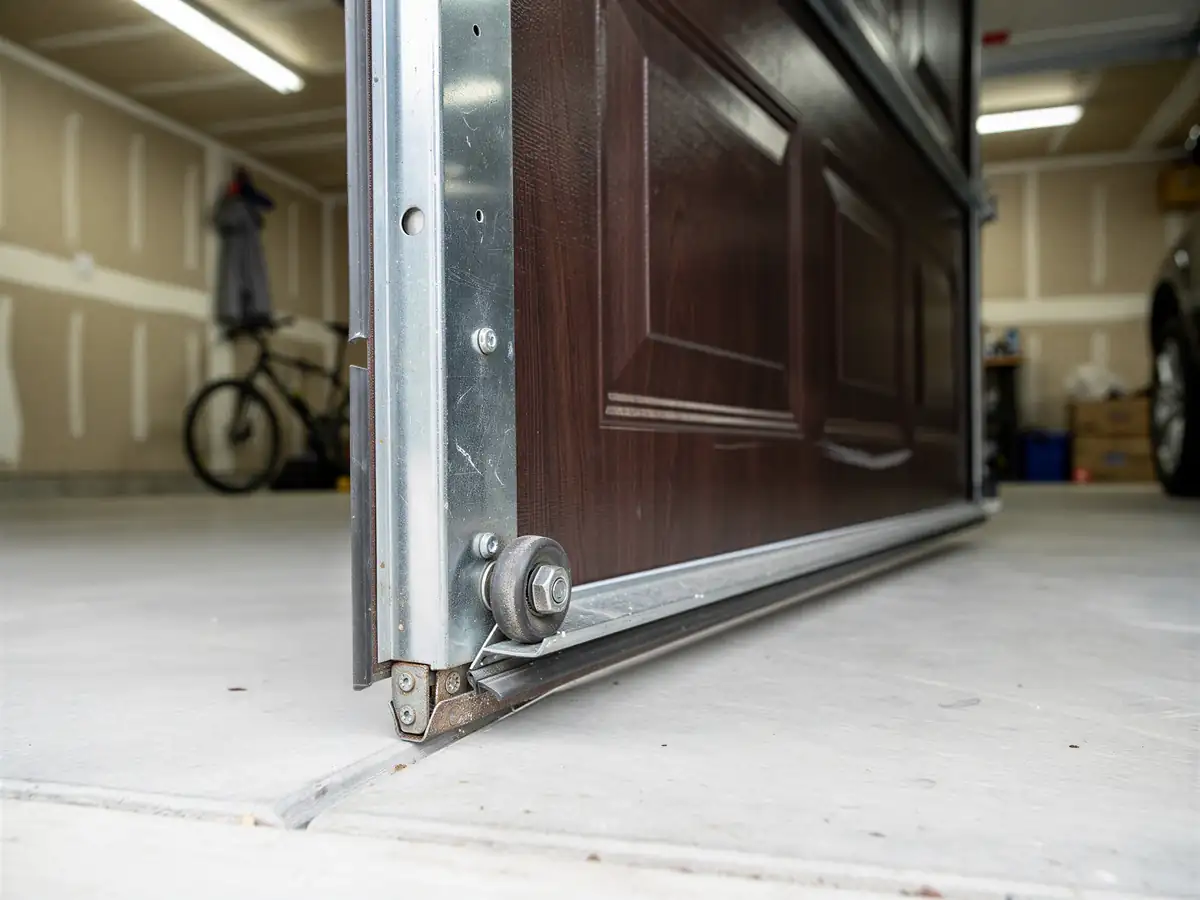
The door usually looks crooked before anything else gives away that it's off track - one bottom corner sits lower than the other, or the whole panel leans a few degrees when it's down. If you run the opener anyway, you'll hear it: a grinding or scraping on one side as a roller drags against the edge of the track instead of rolling inside it, or a hard clunk where the roller has jumped the track entirely and is riding on the bracket. Some doors will still open partway before binding hard and stalling the opener, which trips the safety reverse and sends the door back down.
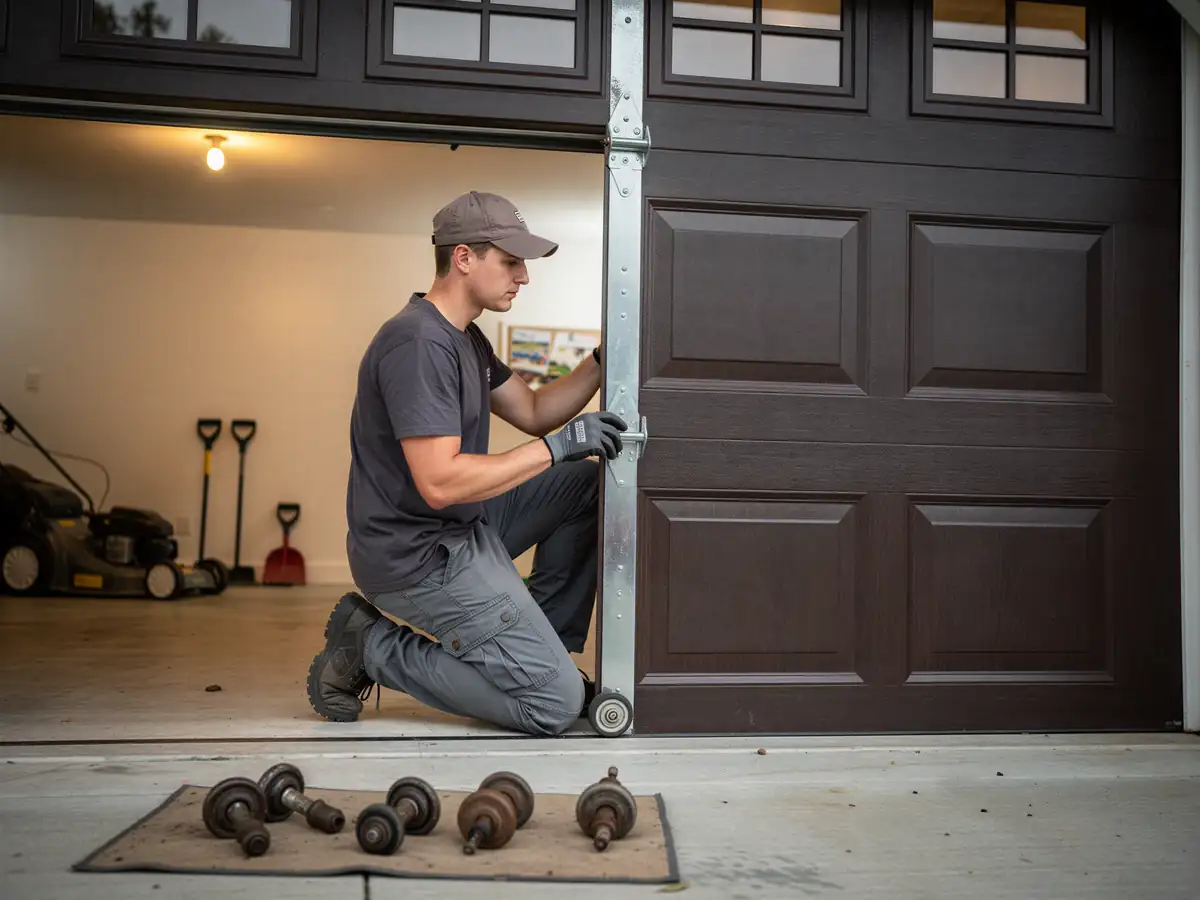
On the 1981-era hardware common in this neighborhood, a frequent trigger is a nylon roller that's worn thin enough to pop out of the track groove under normal travel, not a dramatic cable snap. If the door came off track slowly over a few openings rather than all at once, that's usually what we find.
What It Costs
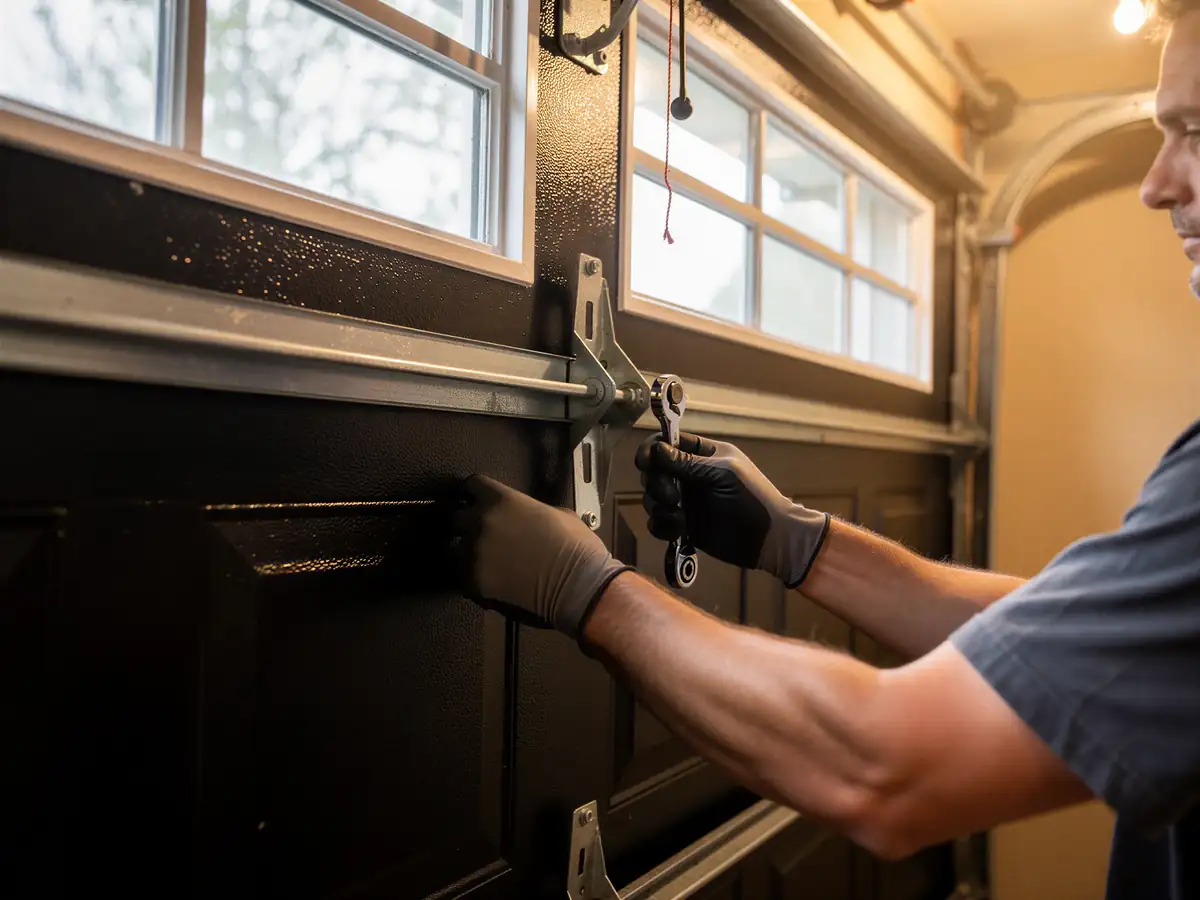
We don't have a flat number to quote here, and we're not going to make one up. What drives the cost is whether the track itself is bent - which means replacing a section - or just sprung loose at the brackets, which is a reset and re-tighten. Add in whether the rollers need swapping (nylon rollers are cheap; full roller sets on a double door add up) and whether the extension springs are original 1981 stock without safety cables, which some owners choose to upgrade while the door's already open.
A straightforward track reset with a roller swap is a different job than a track section replacement plus a spring upgrade, and we'll tell you which one you're looking at once we've got the door open and can see the brackets and the spring coil. We don't guess costs over the phone on this one - too much depends on what the hardware looks like once we're there.