What the Repair Takes
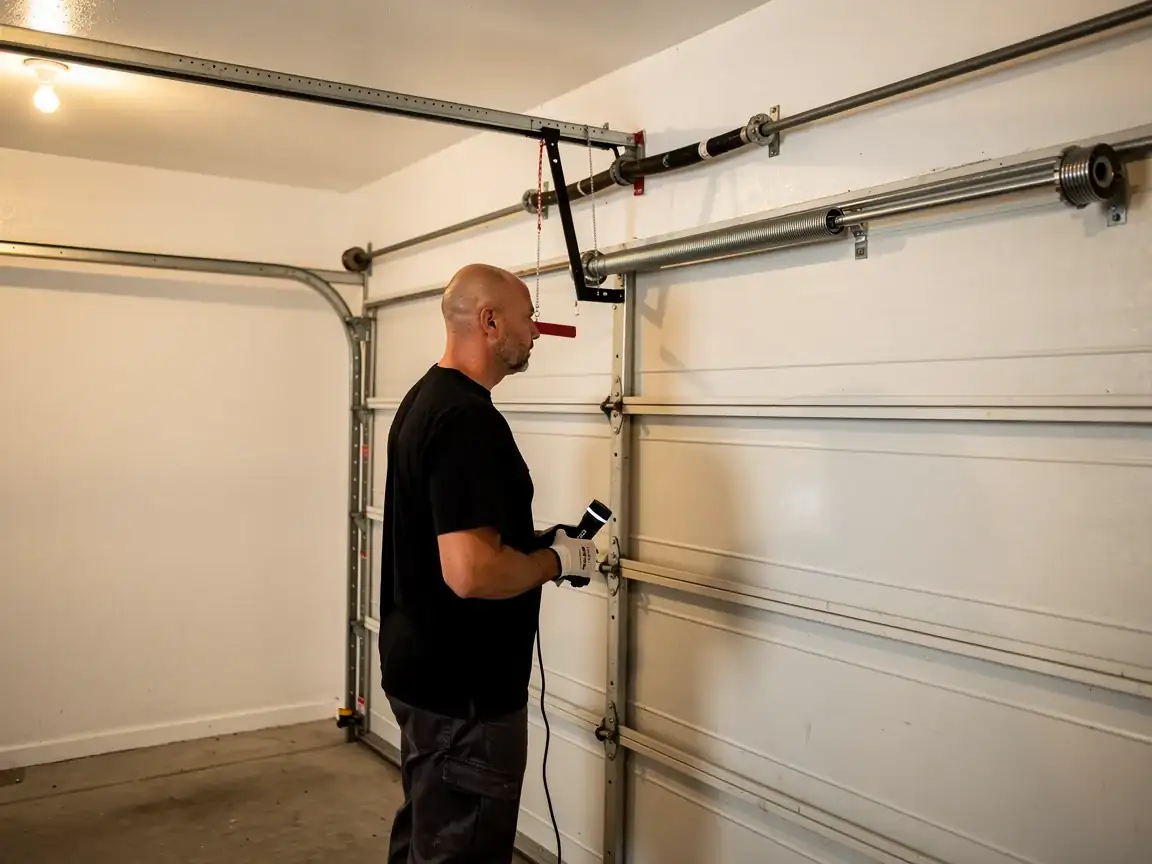
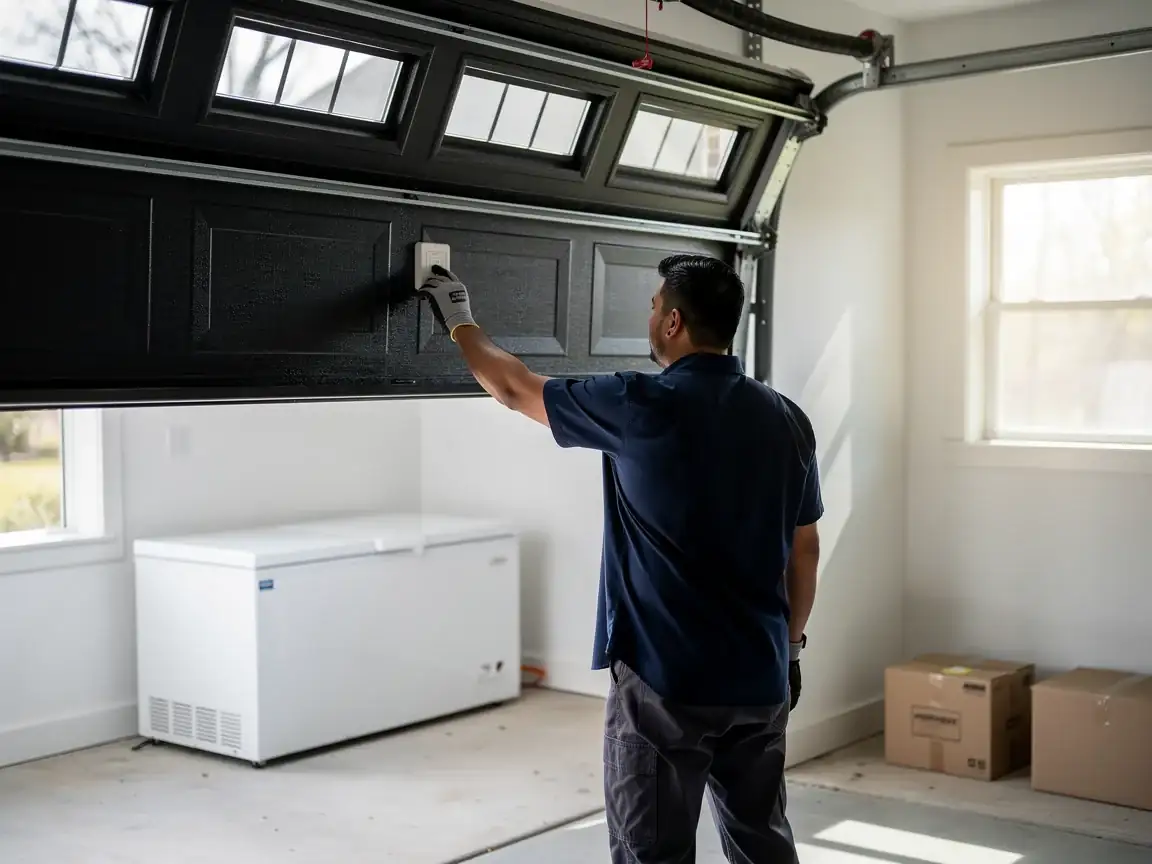
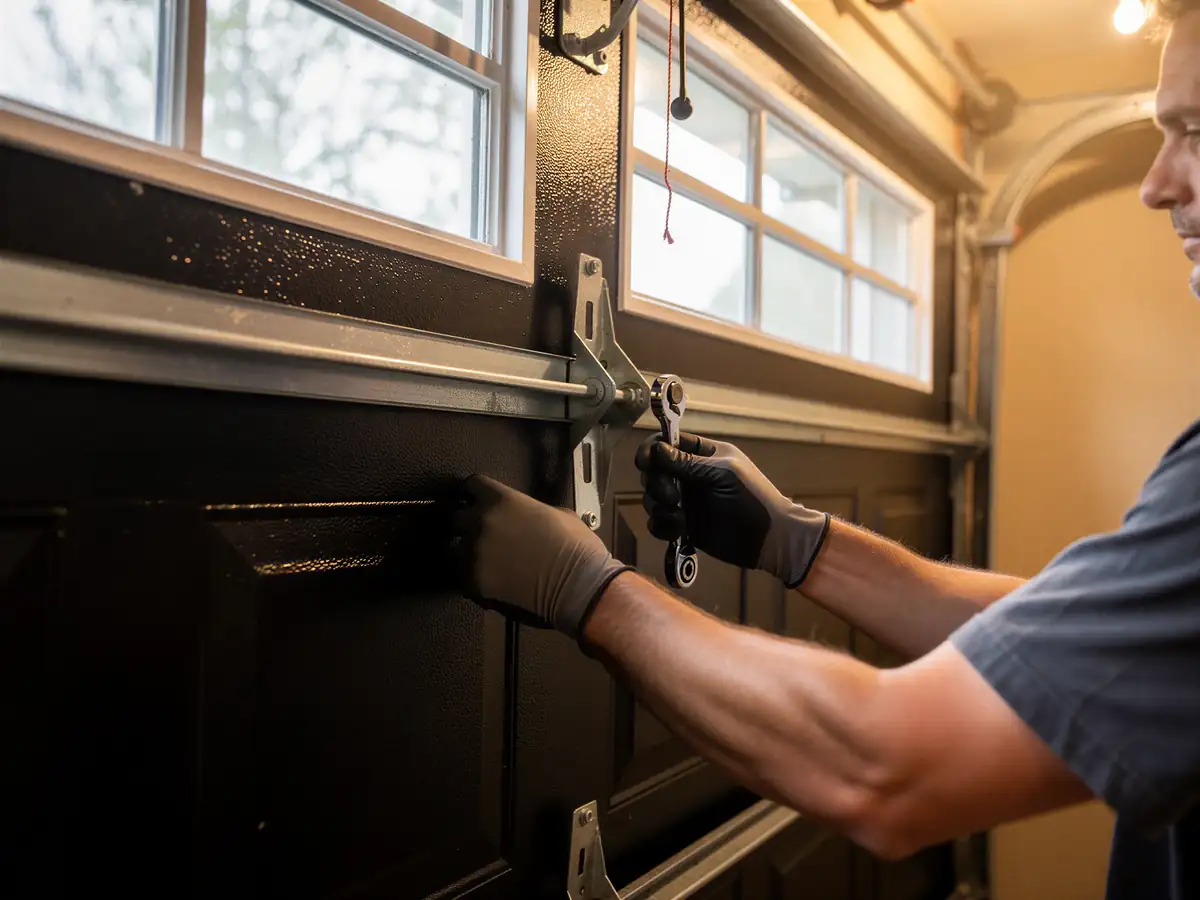
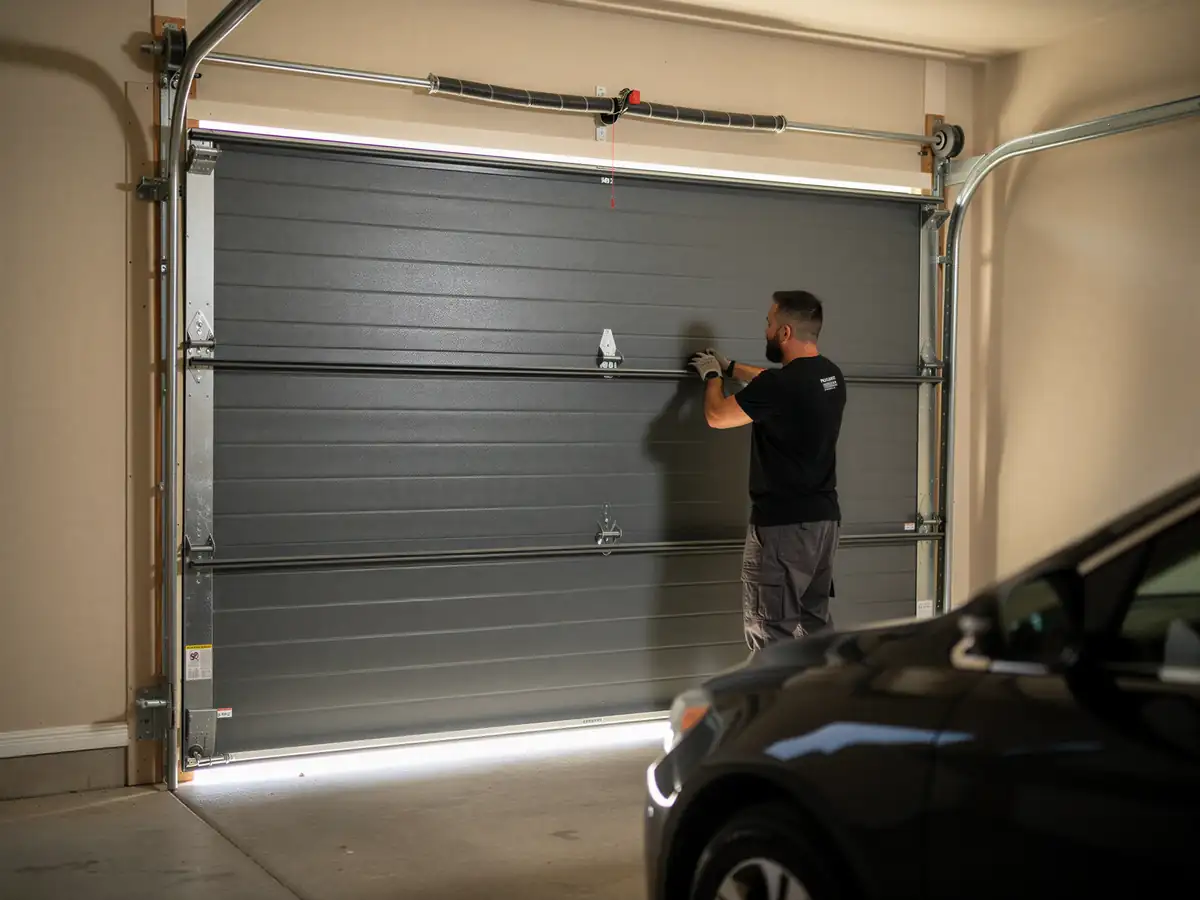
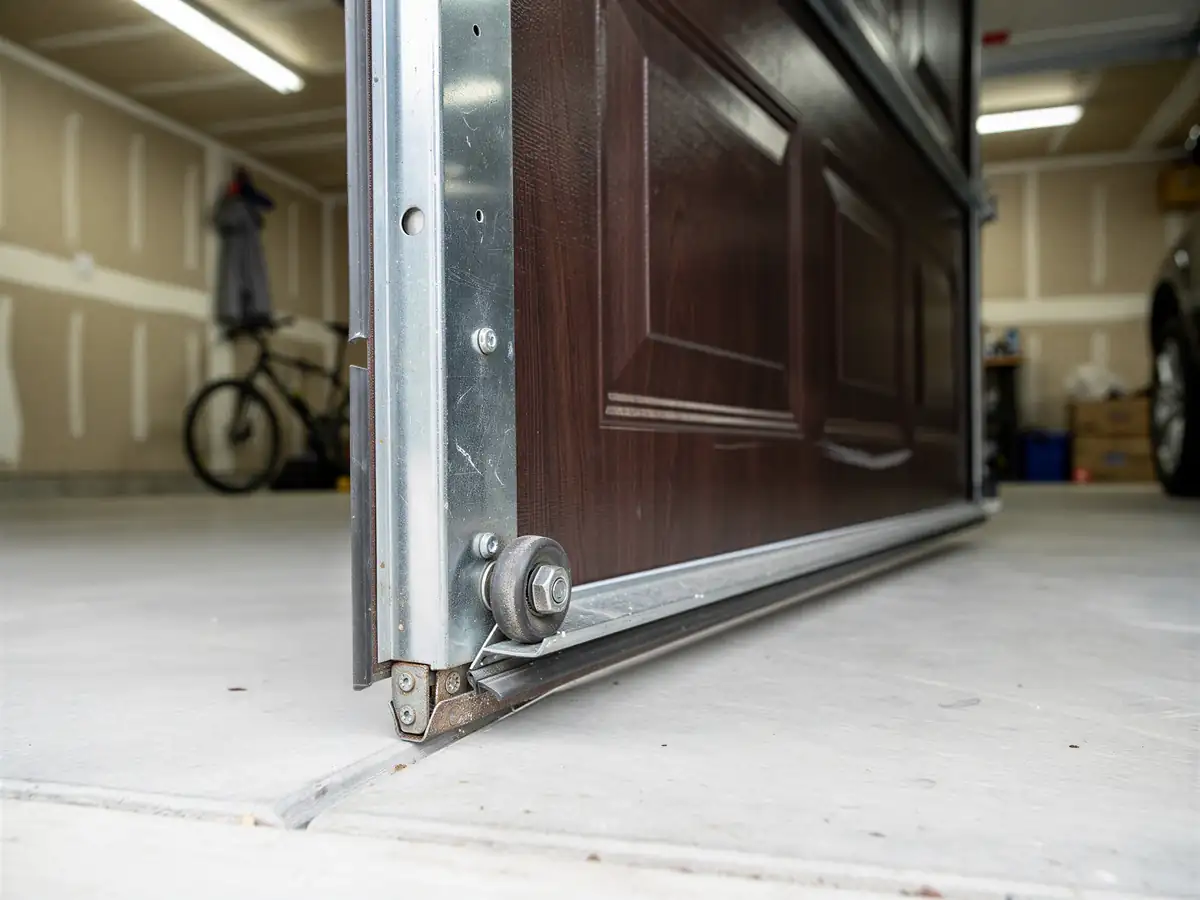
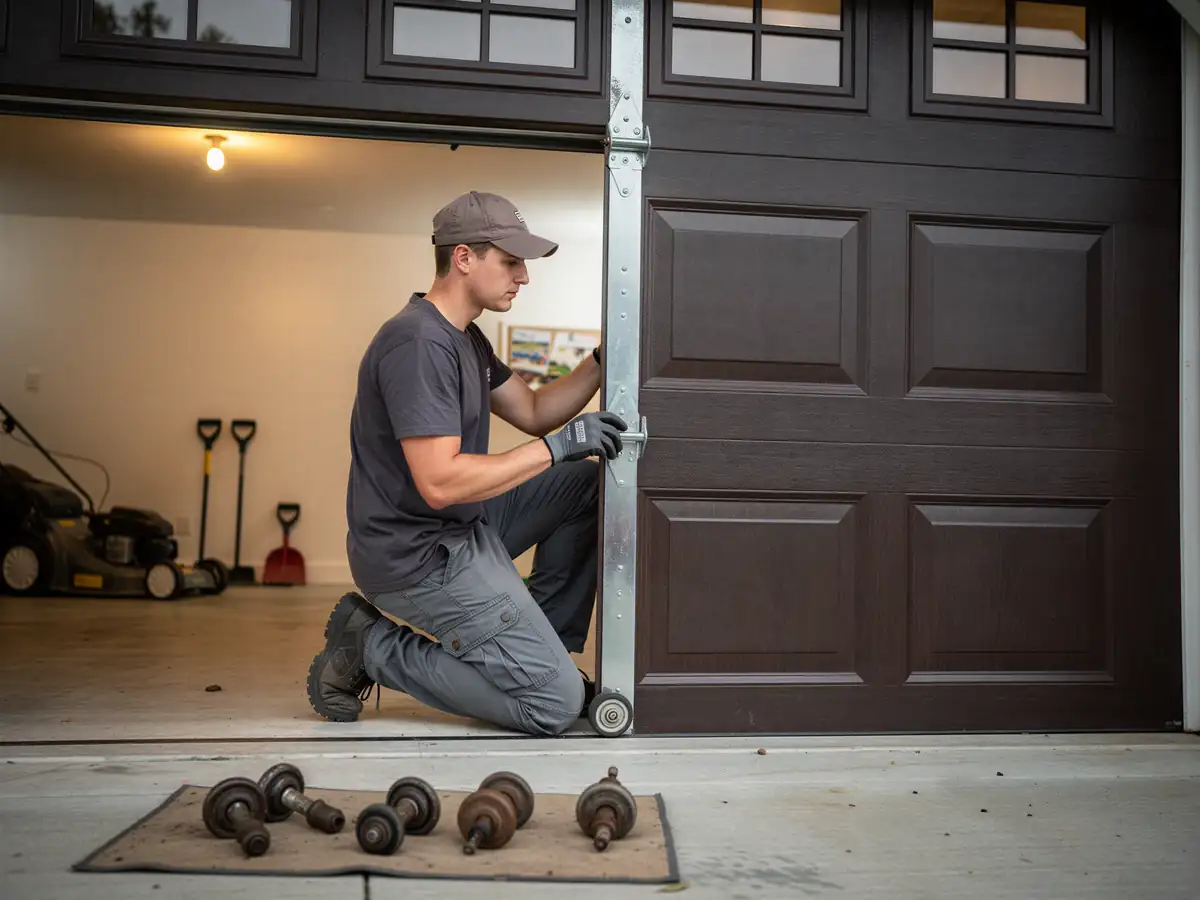
Roller replacement is a hardware swap, not a door rebuild. We pull the old rollers out of the track one at a time, starting at the bottom bracket, and work up the tracks so the door never comes fully off its rails. On most of the single-panel wood and early steel doors still in service around here, that's 8 to 10 rollers per door depending on height. Nylon rollers with sealed bearings go in place of the old steel ones in the majority of jobs now, since steel-on-steel is what's usually failing in the first place. If the track itself has worn a groove or bent from years of a dragging roller, we true it up or replace the section rather than just swapping the roller into a track that's going to chew it up again in a year. A full set runs less than an hour of labor on a straightforward door. Doors with bent track, a seized bearing plate, or rust-frozen hinges take longer, and we tell you that before we start, not after.
The Symptom
You hear it before you see it - a grinding or rattling scrape every time the door moves, loudest where the track curves at the top of the run. Sometimes it's one bad roller and the noise is rhythmic, once per rotation. Sometimes the door visibly wobbles side to side in the track, or catches and jerks for a second before continuing. On older doors with steel rollers, you'll often see flaking rust or a flat worn spot where the roller stopped rolling smoothly and started dragging. Left alone, a dragging roller works the track loose at its mounting brackets, and the door starts pulling harder on the opener motor every cycle, which is a separate repair call waiting to happen.
What Causes It Around Here
Grass Valley's housing stock skews old - most of the service area was built between 1938 and 1984, with the bulk of it going up in the 1960s and '70s across the fifteen communities we cover, from Nevada City and Rough and Ready out through Penn Valley, Colfax, and the more rural stretches toward Foresthill and Camptonville. Doors and track hardware from that era were built to last, but steel rollers on a 50-plus-year-old track weren't designed for the freeze-thaw cycle this area gets. The climate here is mild overall but does see periodic freeze, and that swing - cold nights, warmer days, condensation in an unheated garage - corrodes steel rollers and bearing races faster than it does in a climate that stays either reliably cold or reliably warm. Original hardware on original track, after decades of that cycle, is the single most common reason we get called for roller noise in this area.