What the Repair Takes
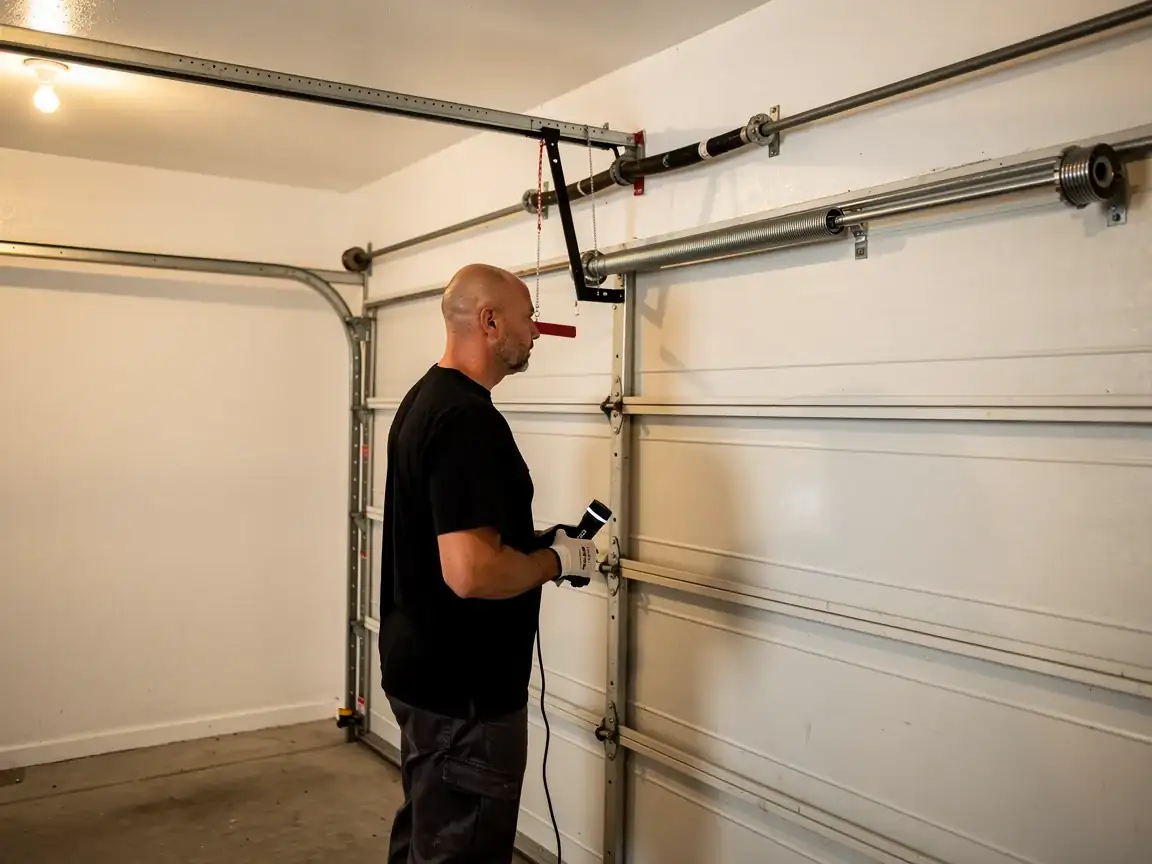
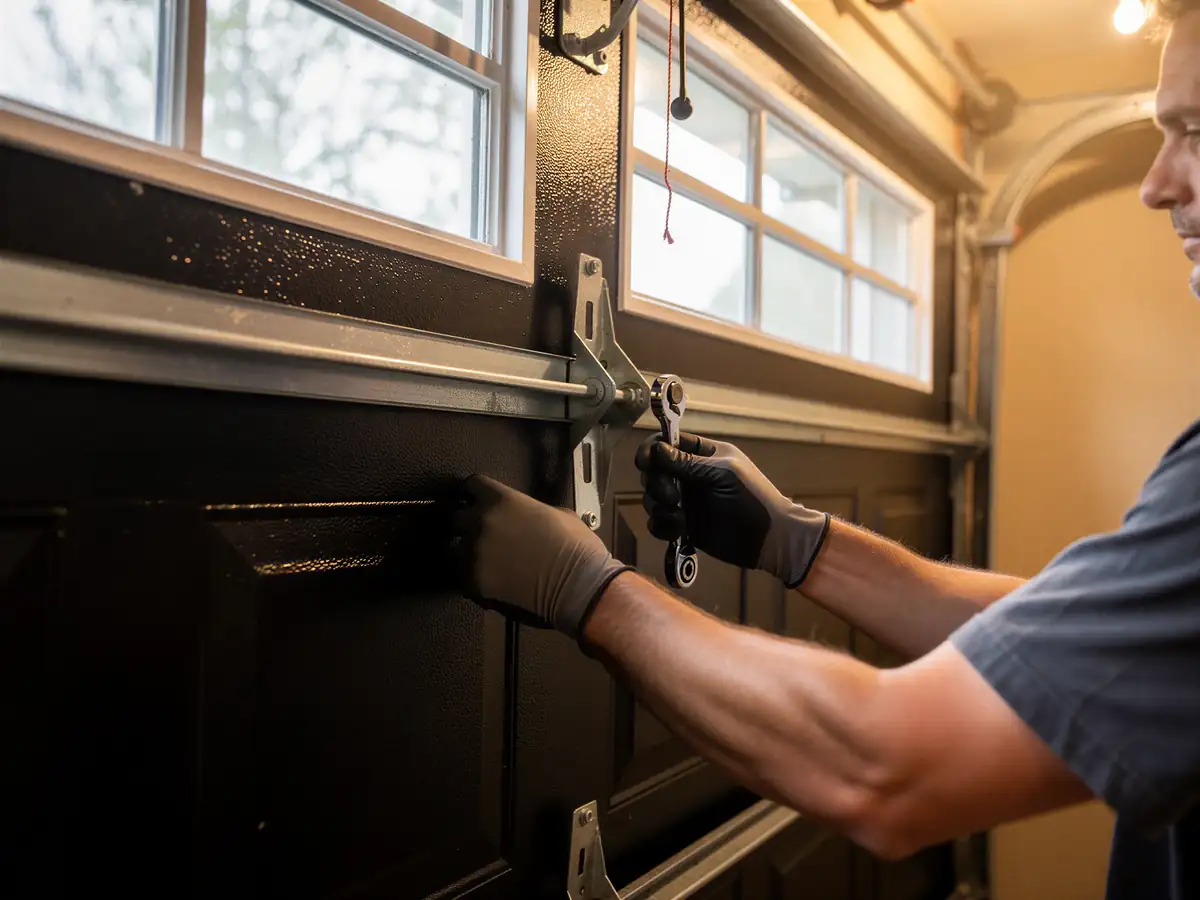
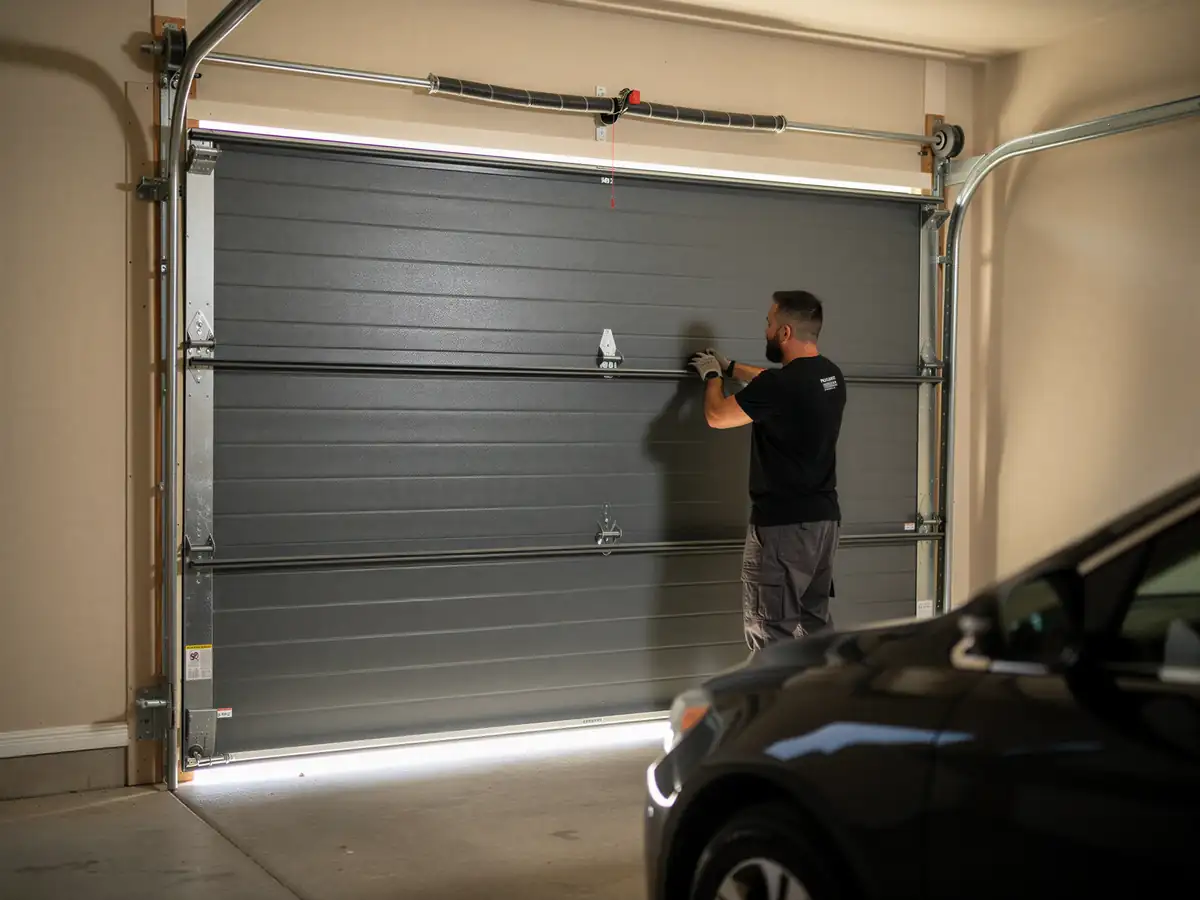
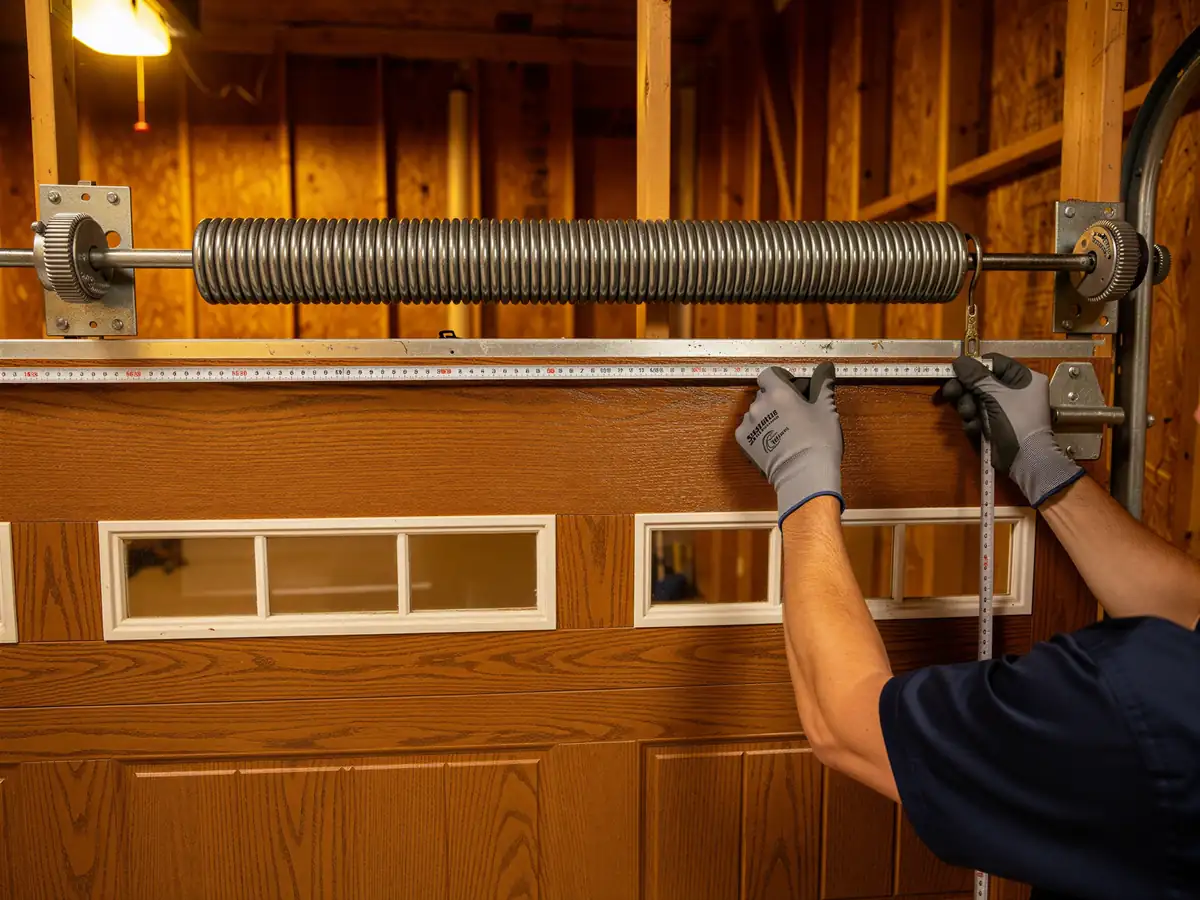
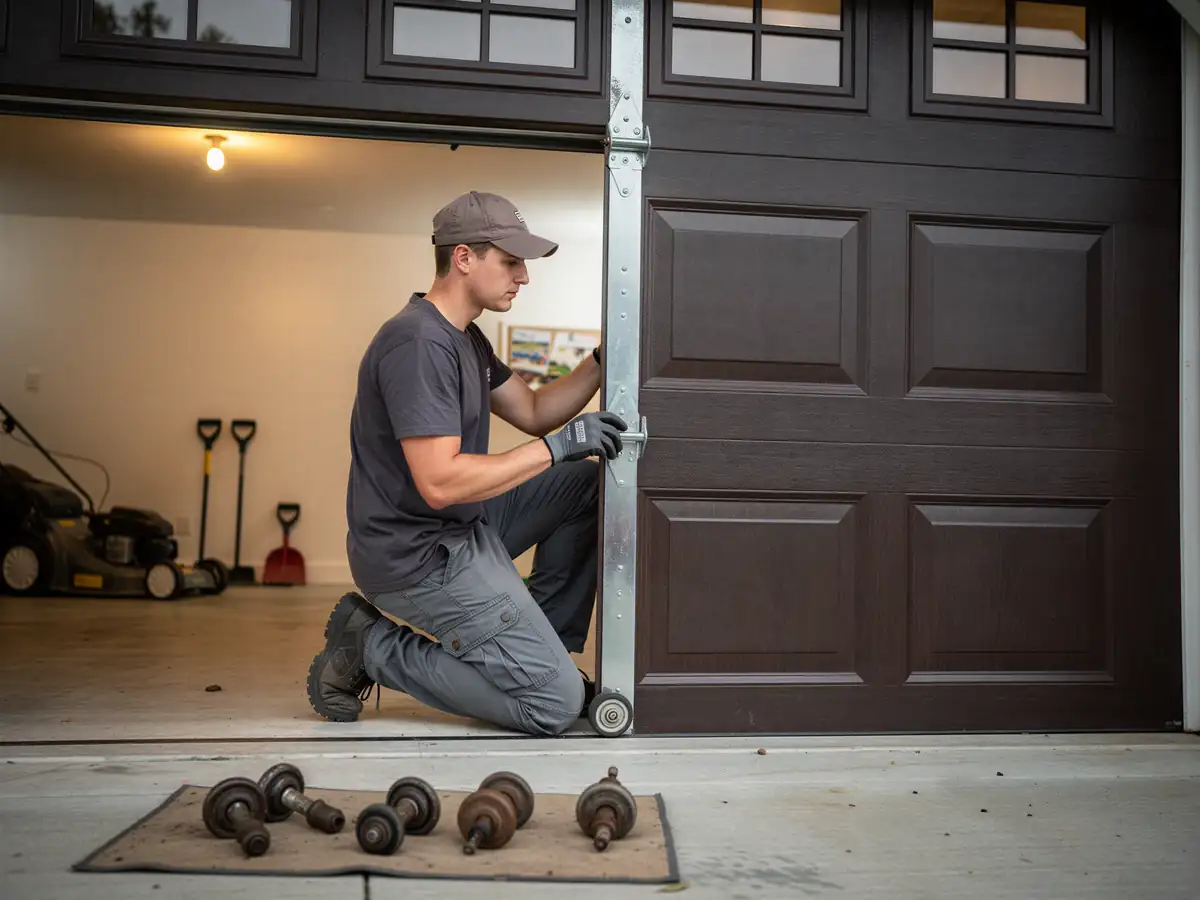
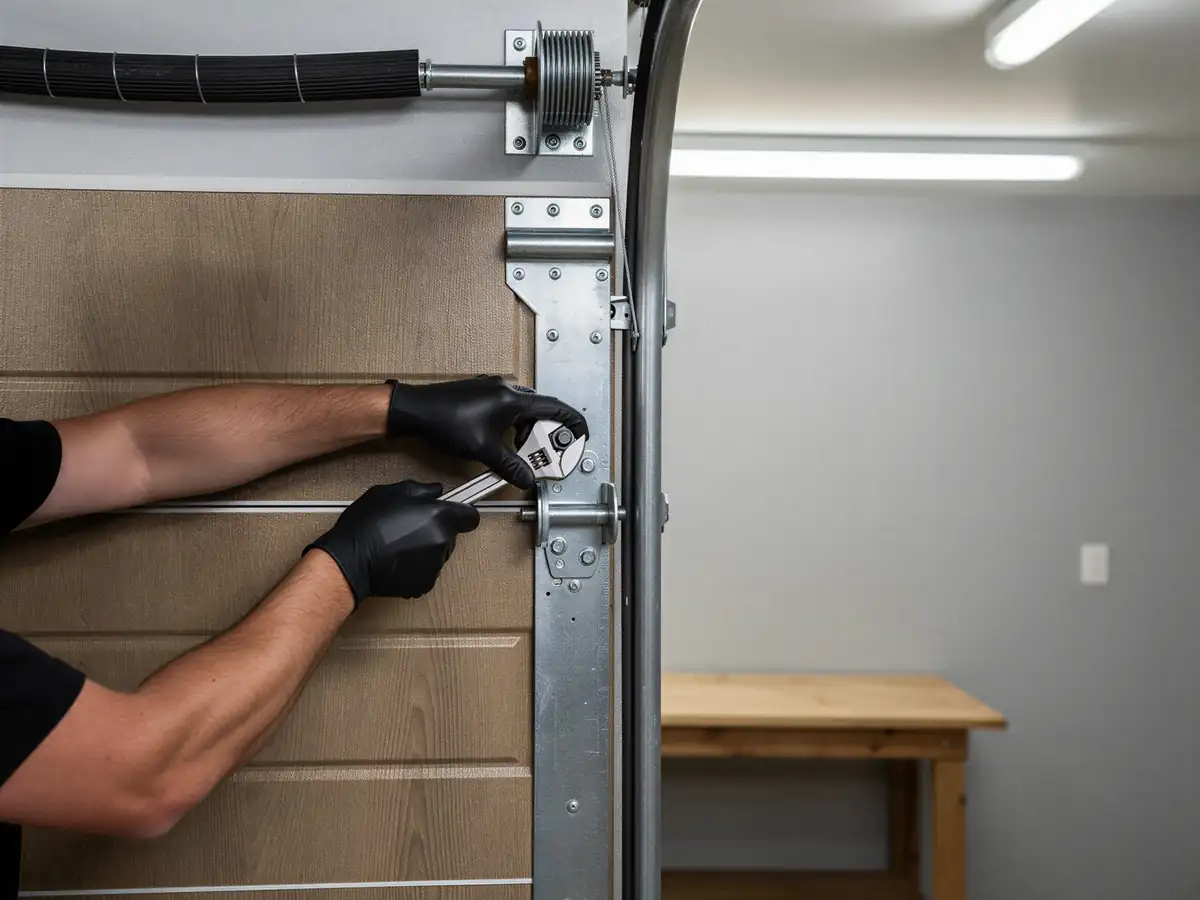
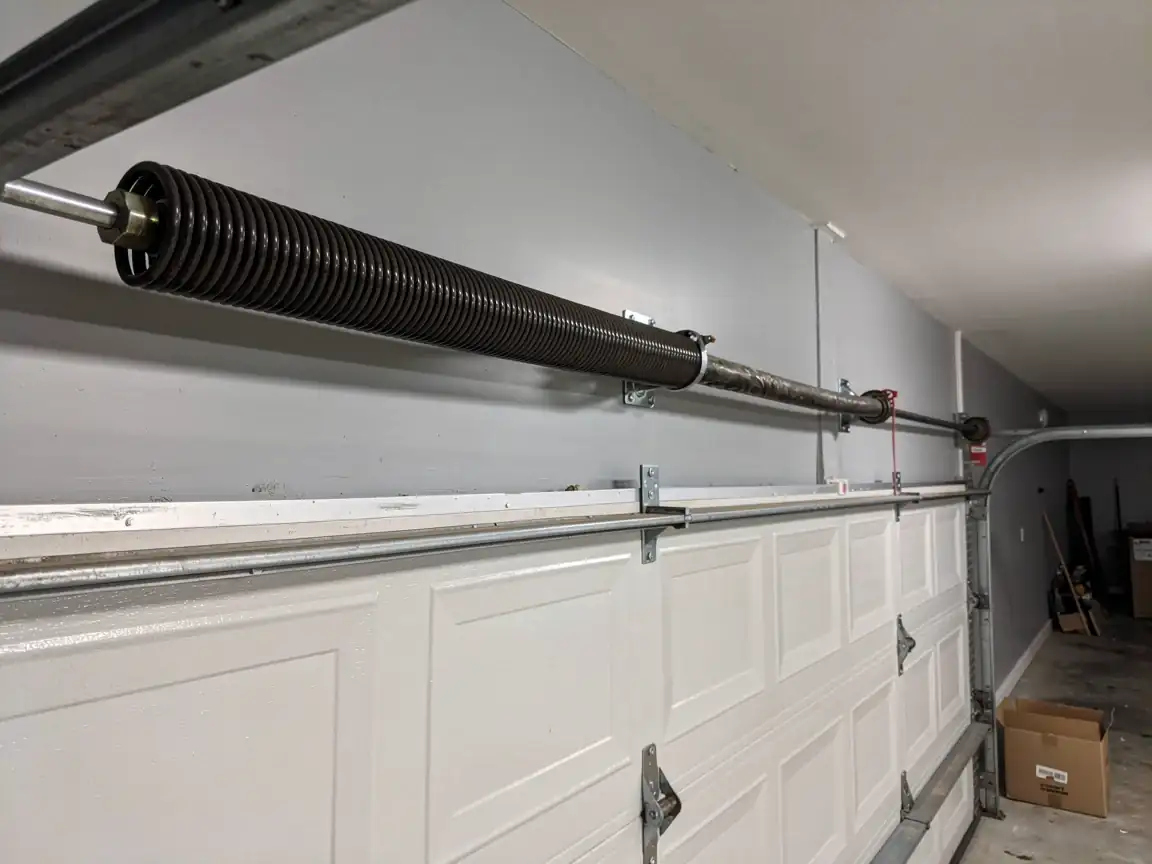
A torsion spring job starts with the door clamped and locked down so the track can't drop while the old spring comes off the shaft. We measure the wire gauge, coil diameter, and length against the door's actual weight rather than guessing from what's already hanging there, because a lot of the springs we pull in this area were undersized to begin with or have been re-wound once already by a previous owner. New springs go on with winding bars, not drills, and we check cable drum alignment and the safety cable before the door cycles again.
On a standard single-door torsion setup this is usually finished within the same visit - parts are generally in stock on the truck for common sizes. If your door is one of the older two-spring setups common on garages built before the mid-1970s, or if the drum or shaft is pitted, we tell you before we start cutting anything loose, not after. That's the honest limitation here: if the shaft itself is bent or the bearing plates are rusted through, the spring swap turns into a bigger job and we'll quote it separately rather than push a fix that won't hold.
The Symptom
The door bangs once, hard, usually when it's resting in the closed position overnight, and in the morning it won't lift past a foot or two off the slab - or it lifts and then drops on its own weight the second you let go of the handle. Some owners hear a sharper crack than usual, almost like a gunshot inside the garage, which is the coil separating at a weak point in the wire. On openers with a chain drive, you'll sometimes get a working motor that just can't move the door, because the spring that used to carry most of the weight isn't carrying any of it anymore.
The Complications
A lot of the garages we work in around Grass Valley still have their original single-spring torsion bar from construction
And single-spring setups put the whole load on one coil instead of splitting it across two - which means when it goes, the door is completely dead rather than just harder to lift. Houses with the older wood jamb construction common to this housing stock also tend to have shallower header clearance, so swapping in a modern double-spring system sometimes means adjusting the mounting bracket rather than a straight drop-in.
We also see a fair number of doors here with no safety cable run through the spring at all
Which was standard practice decades ago but isn't something we leave in place - if that spring lets go while someone's standing under it, there's nothing stopping the coil from launching. Replacing it is part of the job, not an upsell.
What Causes It Around Here
Housing in this area was mostly built between 1938 and 1984, with the bulk of it going up in the 1960s and 70s, and that generation of garage door is now 50 to 60 years past its original spring's rated cycle life regardless of how little the door gets used. Springs don't fail from cold the way cables and rollers sometimes do, but the mild climate here still runs through occasional freeze nights, and that swing in temperature stiffens old steel just enough to catch a spring at its weakest point on the one morning it decides to go. Combine original-era hardware with a few thousand open-close cycles a year and a spring that was wound in, say, 1975 has simply run out of life - it was never going to last forever, freeze or no freeze.