The Symptom
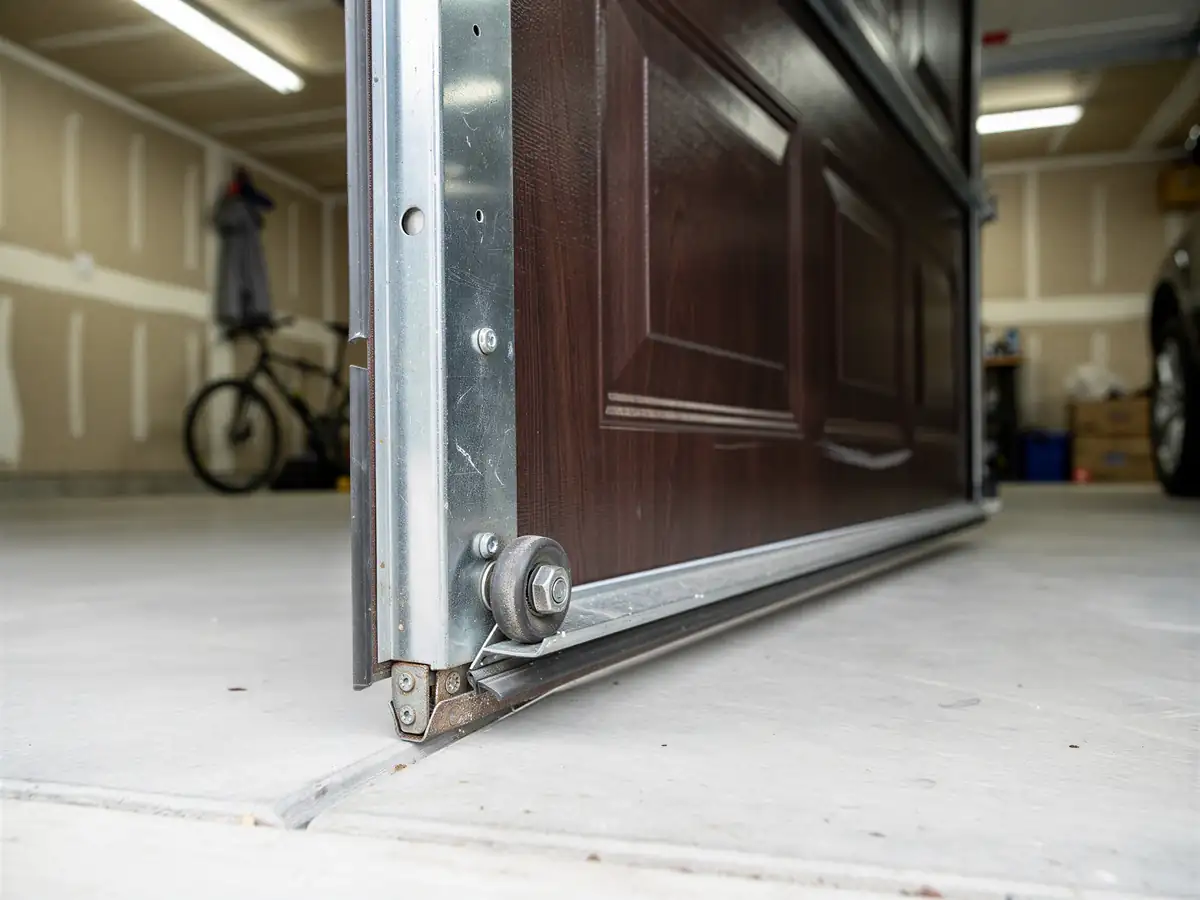
Median household income in Lake Wildwood runs about $87,552, a bit under the $91,135 figure for the rest of our Grass Valley service area. At that income level, swapping out rollers before they take a track with them is the cheaper call almost every time - a track bend usually means a new track, new hinges, sometimes a new section, where a roller job alone is a fraction of that. Most houses here went up around 1983, a few years newer than the 1938-1984 range and 1977 median build date across the broader service area, which means the hardware is a slightly later generation of steel sectional door than what you'll find on an older Grass Valley street. The symptom is the same complaint either way: a grinding or popping sound as the door travels, a roller that's visibly chewed down to its stem, or a door that's started riding slightly off-center in the track. Left alone, a worn roller eventually jumps the track entirely, usually on the bottom panel where the weight load is highest. Catching it before that point is the whole point of a roller call.
What Is on the Truck
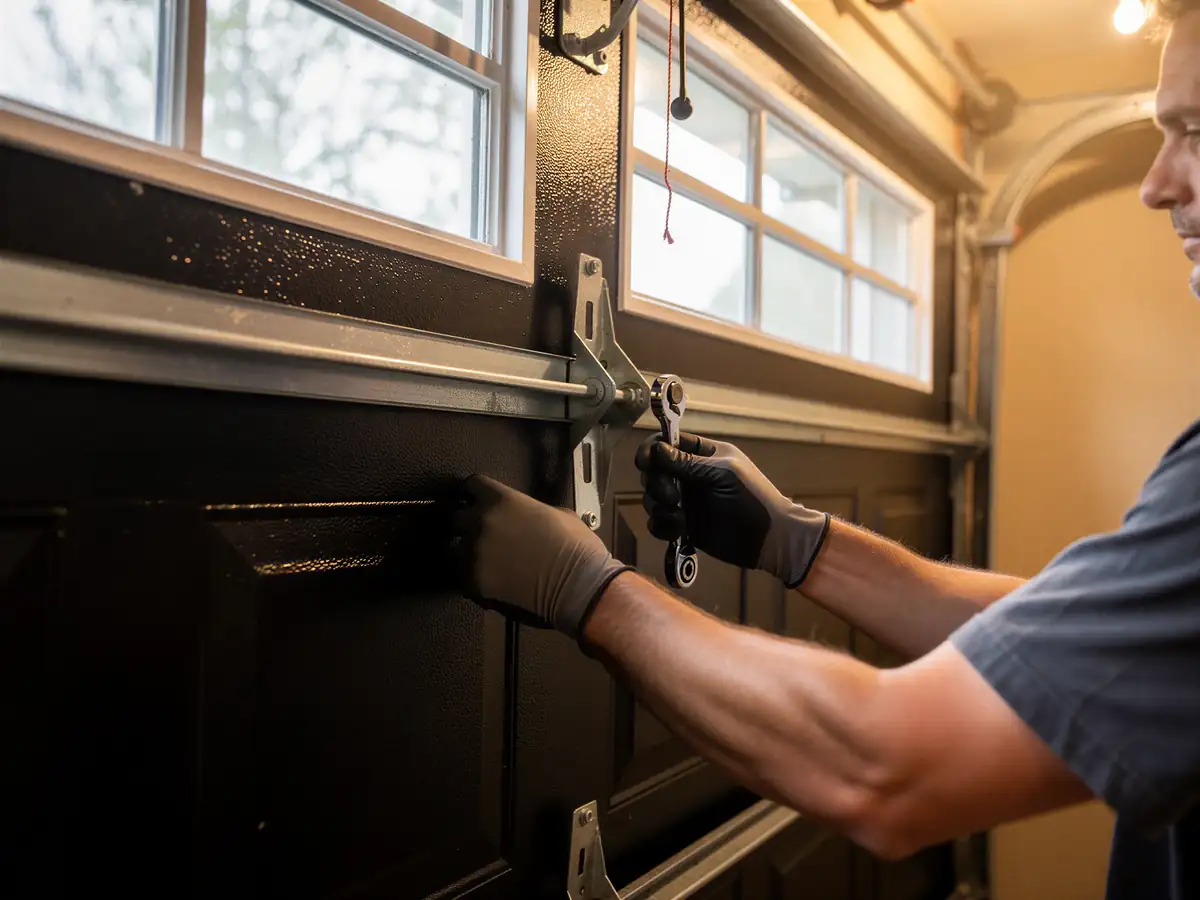
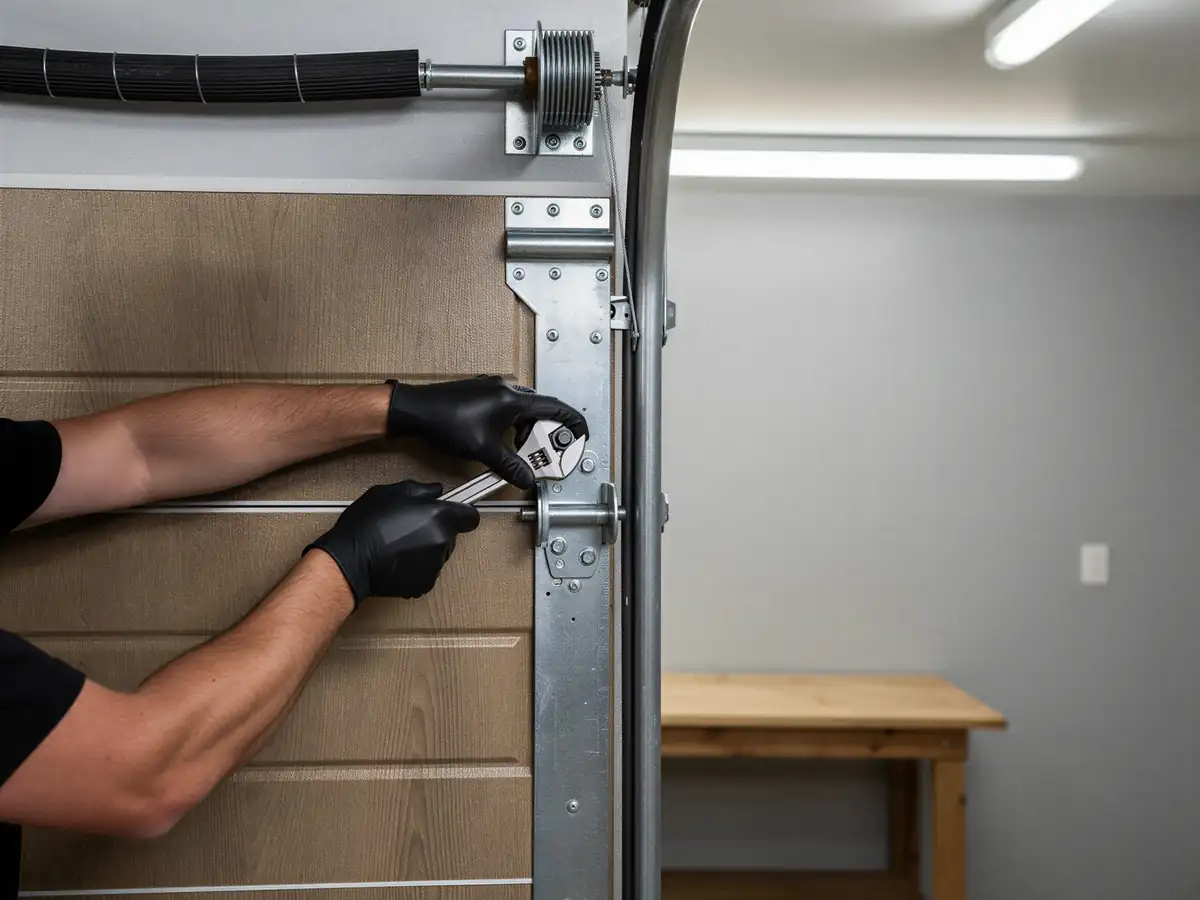
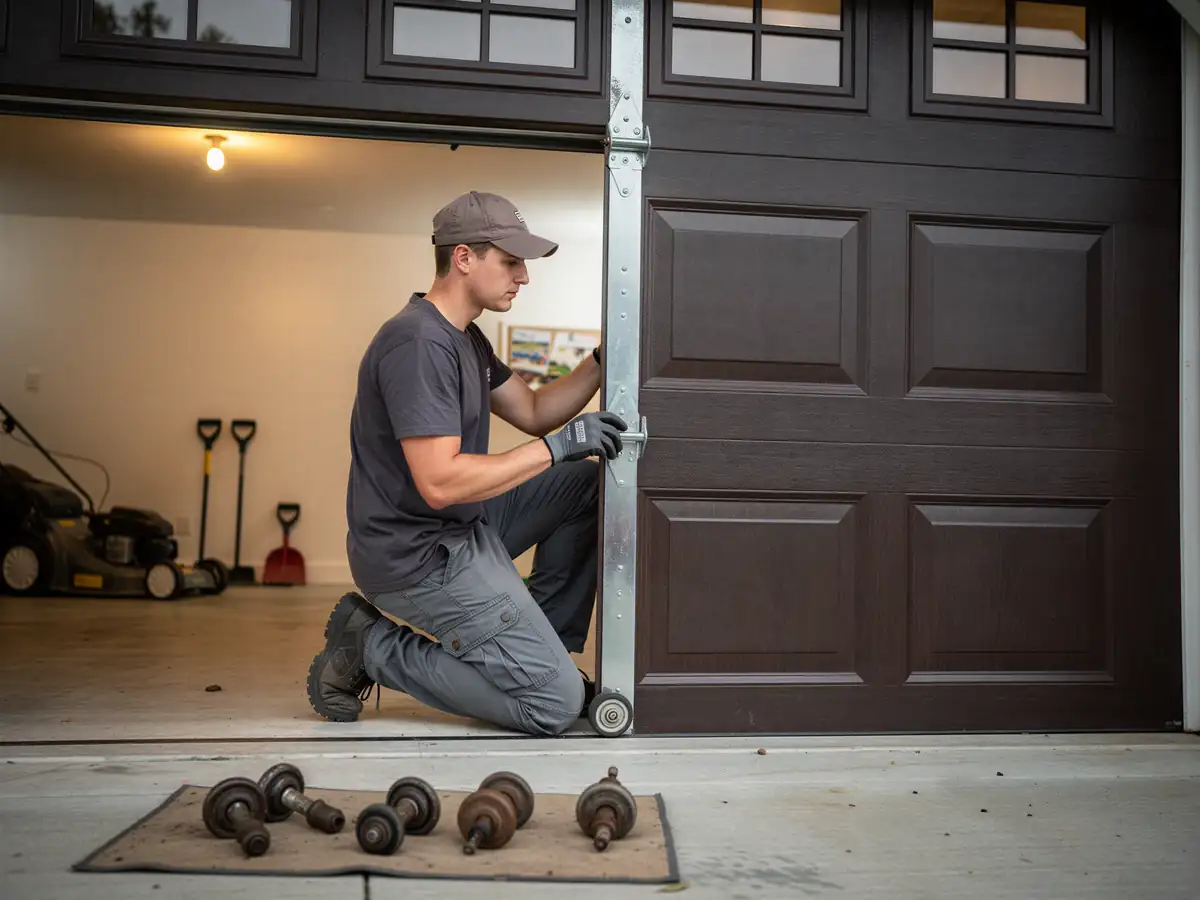
For doors from this era we carry both 7-ball sealed-bearing steel rollers and nylon rollers, since 1983-vintage doors were built with either depending on the manufacturer, and we match what's already on the door rather than upsell a swap nobody asked for. We stock galvanized roller stems in the common stem lengths used on that generation of track, plus track lubricant rated for our mild climate with occasional overnight freeze - the freeze matters because cheap original nylon rollers get brittle and crack at the edges once temperatures drop, which is a common failure point on doors this age. We also carry hinges, since a worn roller often takes the hinge it rides in down with it, and replacing one without checking the other just means a second call later.
The Complications
The complication on 1983-era doors isn't usually the roller itself, it's the track width. Doors from this period sometimes used a narrower track than what's standard on newer stock, and a modern 7-ball roller stem can be slightly oversized for it. We check stem diameter against the existing track before cutting anything loose, because forcing a mismatched roller into an old track just moves the grinding noise instead of fixing it. The other wrinkle is that with roughly 1,966 households behind the gate here, a fair number of these doors have had one or two prior repairs already - a replaced spring, a patched panel - and sometimes a well-meaning prior fix used a roller or bracket that doesn't match the rest of the door. We work around what's actually there rather than assuming a clean factory setup.
What It Costs
We don't have a flat number to quote here, since the cost depends on how many rollers need replacing, whether it's nylon or steel, and whether a hinge or bracket comes along for the ride. What we can say: a roller job is priced well below a track or panel replacement, which is why catching the grinding noise early matters, especially at the income level common in Lake Wildwood where a smaller repair now beats a bigger one later. Our honest limitation - if the rollers have already pulled the track out of alignment, roller replacement alone won't fix the door. At that point you're looking at a track adjustment or replacement on top of the rollers, and we'll tell you that on site rather than sell you a roller swap that doesn't solve the actual problem.